
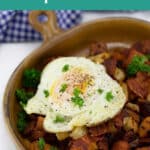
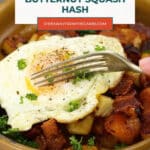
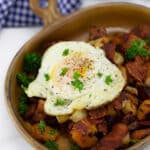
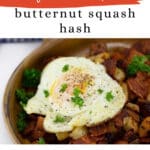
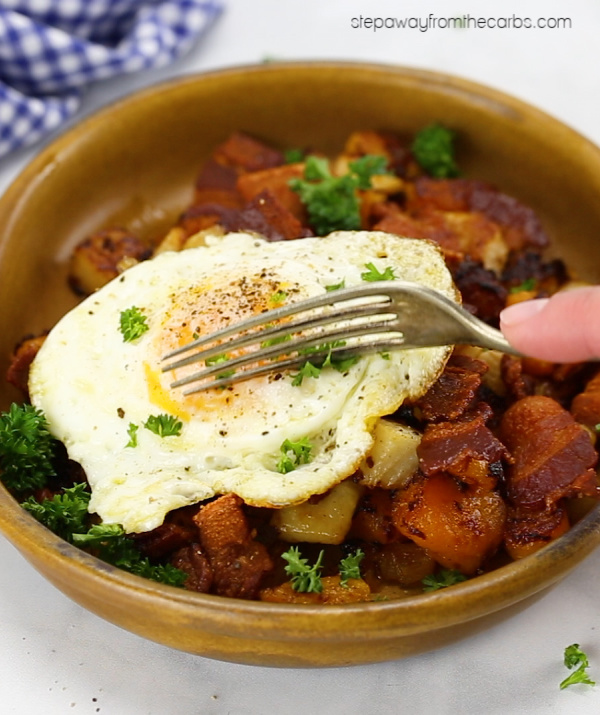
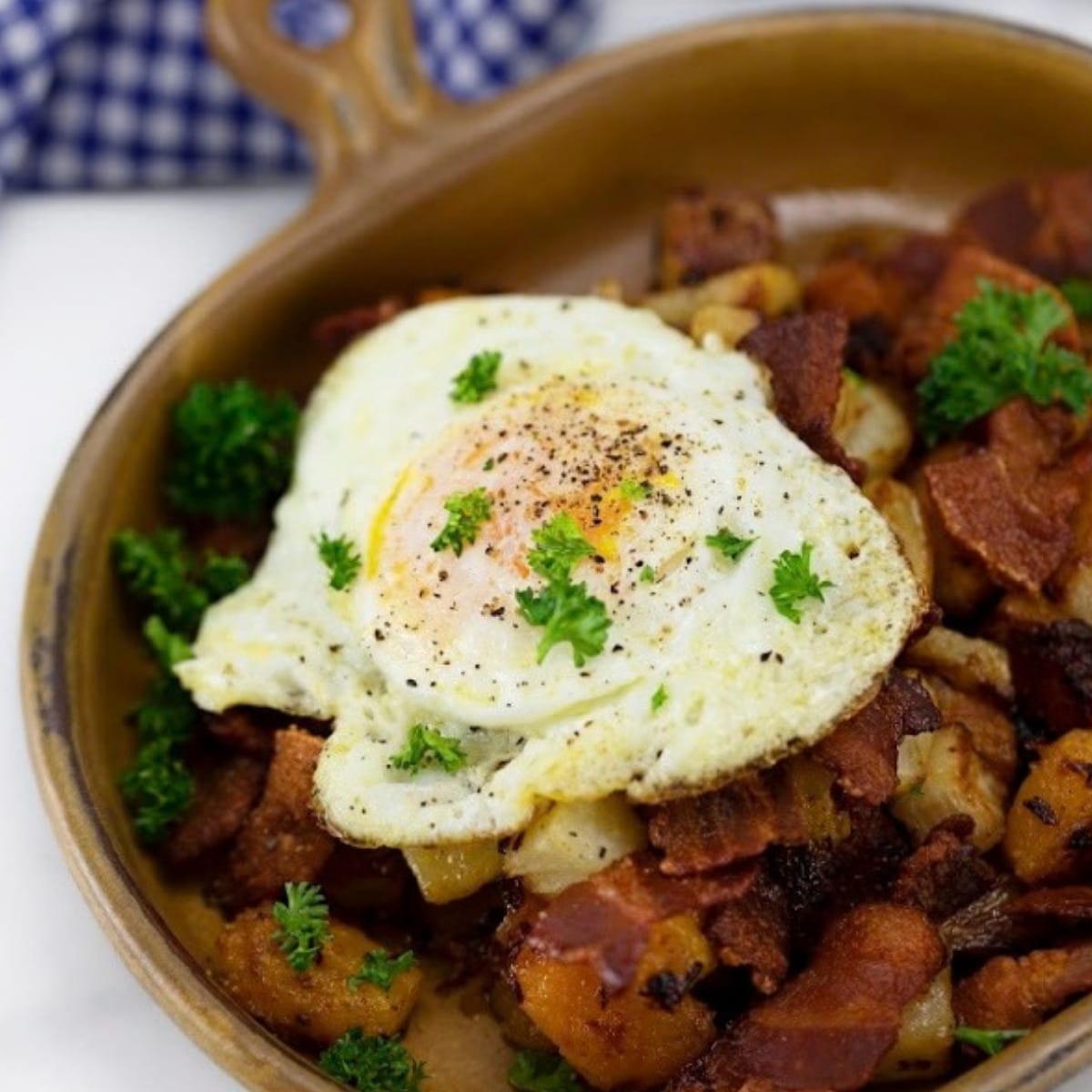
This low carb butternut squash hash is crispy bacon, golden cubes of butternut squash and turnip, and a runny fried egg on top, all made in one skillet in about 40 minutes. Each serving comes in at about 10g net carbs and 13g of protein, so it's a filling, keto-friendly breakfast that actually feels like a treat.
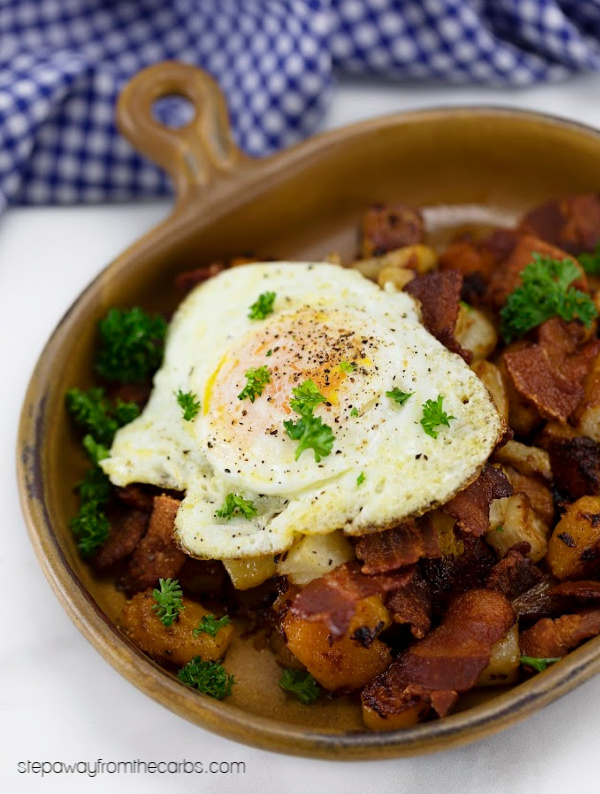
I love butternut squash, but it's one of those vegetables low carbers tend to be nervous about. The trick here is mixing it half and half with turnip, which has a similar firm texture once it's browned in bacon fat but far fewer carbs. You still get that sweet, nutty squash flavor in every bite, and a serving stays comfortably low carb. It's a great one for a lazy weekend brunch, and you'll find plenty more ideas in my low carb brunch recipes.
Watch the video tutorial, or scroll down for the full details and the printable recipe card.
Is Butternut Squash Low Carb?
Short answer: it's moderate. Butternut squash is a lot lower in carbs than potatoes or sweet potatoes, but it's higher than the leafy greens and summer squash most of us lean on. One cup of raw, cubed butternut squash (about 140 g) has roughly 16g of total carbs and 3g of fiber, which works out to about 13g net carbs per cup. Cooked squash loses water and packs down, so a cup of cooked cubes is closer to 15g net carbs.
Here's how it compares with some other vegetables you might put in a hash (1 cup, raw and cubed, approximate):
| Vegetable (1 cup) | Total carbs | Fiber | Net carbs |
|---|---|---|---|
| Russet potato | 27g | 2g | 25g |
| Sweet potato | 27g | 4g | 23g |
| Butternut squash | 16g | 3g | 13g |
| Turnip | 8g | 2g | 6g |
| Spaghetti squash | 7g | 1.5g | 5.5g |
So is it keto? If you're aiming for 20g net carbs a day, a full cup of butternut squash on its own would use up most of your day, which is why a lot of strict keto plans skip it. On a more relaxed low carb diet it fits just fine in sensible portions. I've eaten low carb for a long time, and I'd much rather enjoy a measured amount of squash than cut it out completely.
How This Hash Keeps a Serving at 10g Net Carbs
This recipe makes two servings with just 1 cup of butternut squash in the whole pan, so each person gets half a cup. The other half of the "potato" job goes to 1 cup of turnip at about 6g net carbs. Add the bacon and eggs (which are close to zero carb) and a serving lands at about 10g net carbs. If you made the same hash with 2 cups of butternut squash and no turnip, it would be closer to 14g net per serving, and with regular potatoes you'd be well over 25g.
The bacon and eggs matter too. They bring the fat and protein that make this a proper meal rather than a side of vegetables, so you stay full until lunch. If you love turnip in place of starchy sides, try my turnip rice or browse the best keto turnip recipes.
Key Ingredients & Substitutions
- Butternut squash. Peeled and cut into ½-inch cubes. Many stores sell it pre-cubed, which saves a lot of work. Pumpkin or kabocha squash work the same way and have similar carb counts.
- Turnip. The secret to keeping the carbs down. Once it's browned in bacon fat it tastes mild and slightly sweet, a lot like potato. Daikon radish or rutabaga can stand in (rutabaga is a little higher in carbs).
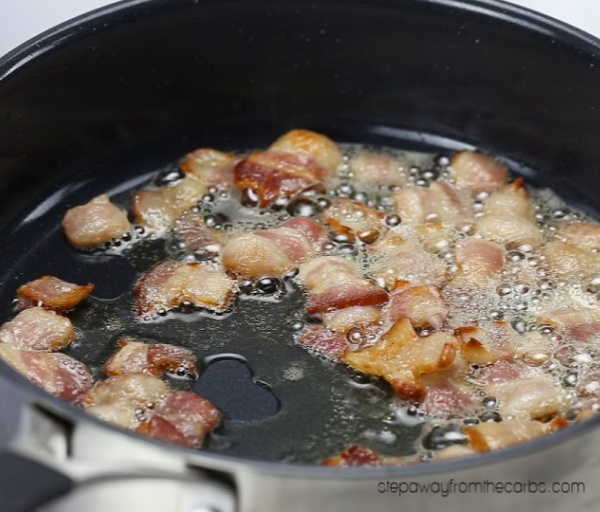
- Bacon. Smoked streaky bacon gives the most flavor, and its rendered fat is what the vegetables cook in. Thick-cut bacon works too; just give it a couple more minutes.
- Eggs. One fried egg per person, cooked however you like it. A runny yolk makes a lovely sauce for the hash.
- Olive oil. Just a teaspoon to get the bacon started. Here's my guide to olive oil for low carbers if you want to know more.
- Black pepper and parsley. Bacon is salty enough that I don't add salt, but taste and adjust. Parsley is optional and adds a fresh pop of color.
Helpful Tips
Cut everything the same size. Turnip and butternut squash cook at about the same rate, but only if the cubes match. Aim for ½-inch pieces so nothing ends up mushy while the rest is still firm.
Use a big pan. A 12-inch skillet lets the cubes sit in a single layer, which is how they get those browned edges. Crowded vegetables steam instead of crisp.
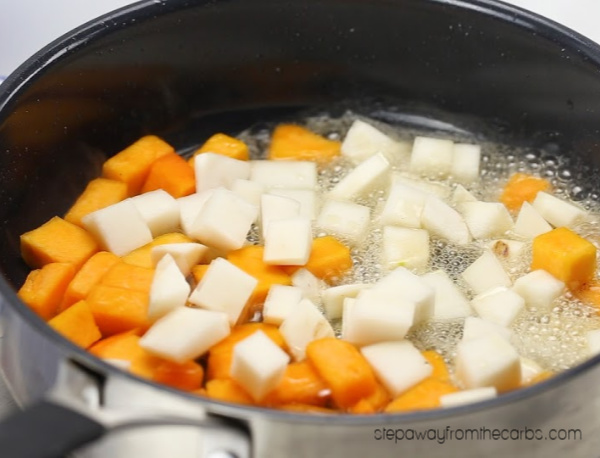
Don't stir too often. Give the vegetables a few minutes between stirs so they can brown. They're done when a fork slides in easily, usually around 20 minutes.
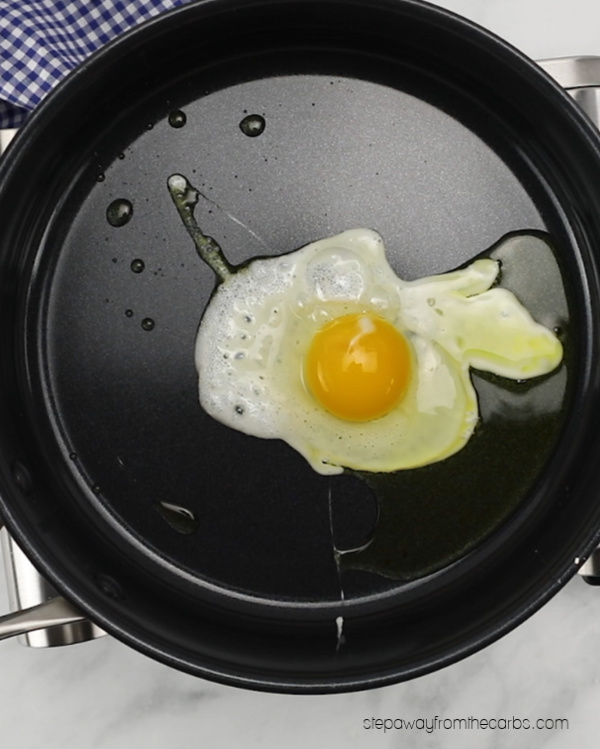
Time the eggs at the end. Start the eggs when the vegetables are nearly tender. A small 8-inch nonstick skillet over medium-low heat gives set whites and runny yolks in 3 to 4 minutes.
Add the bacon back last. Stirring the bacon in at the end keeps it crisp. If it goes in too early it softens in the steam from the vegetables.
Variations
- Add sausage. Brown 4 oz of crumbled breakfast sausage with the bacon for a heartier hash with extra protein. My keto breakfast sausage is perfect here, or use a sugar-free store-bought sausage.
- Double the eggs. Top each serving with two fried eggs instead of one. It adds about 6g of protein per serving and almost no carbs.
- Baked eggs in the hash. Make two little wells in the finished hash (or four if you're doubling up), crack in the eggs, cover the pan and cook on low for 5 to 6 minutes until the whites are set.
- Scrambled or poached. Not a fried egg fan? Soft scrambled eggs or a poached egg are just as good on top.
- Add onion and peppers. A quarter of a diced onion and half a diced bell pepper add flavor for about 2g more net carbs per serving.
- Spice it up. A pinch of smoked paprika, chili flakes or a little fresh thyme with the vegetables gives a completely different feel.
Serving Ideas
This hash is a full breakfast on its own, but for a bigger brunch spread serve it with sliced avocado, a few cherry tomatoes or a simple green salad. A spoonful of hot sauce or salsa on top is never a bad idea either.
Leave off the eggs and it becomes a cozy fall side dish that goes nicely with roast chicken or pork chops. If you're feeding a crowd, pair it with my low carb hash browns for a proper diner-style breakfast.
Storing & Freezing
Keep leftover hash (without the eggs) in an airtight container in the fridge for up to 4 days. Reheat it in a hot skillet with a tiny bit of oil for a few minutes so the edges crisp up again; the microwave works but leaves it softer. Fry fresh eggs to go on top, since leftover fried eggs turn rubbery.
The cooked hash can be frozen for up to 2 months, although the squash and turnip will be a little softer once thawed. Thaw it overnight in the fridge, then reheat in a skillet until piping hot. To get ahead, you can also peel and cube the squash and turnip up to 3 days in advance and keep them in a sealed container in the fridge.
More Low Carb Breakfast and Squash Recipes
If you loved this recipe, here are a few more you might enjoy:
- Butternut Squash Dip
- Low Carb Pumpkin Cauliflower Risotto
- Keto Sheet Pan Sausage and Veggies
- Low Carb Shakshuka with Tomatillos
📖 Recipe
Low Carb Butternut Squash Hash
Ingredients
Equipment
Step-by-Step Instructions
- Peel the turnip and butternut squash and cut both into ½-inch (1 cm) cubes, so they cook at the same rate.
- Heat the olive oil in a large skillet over medium heat. Add the chopped bacon and cook, stirring now and then, for 5 to 7 minutes, until the fat has rendered and the bacon is crisp. Lift the bacon out with a slotted spoon and set it aside on a plate, leaving the fat in the pan.
- Add the turnip and butternut squash to the bacon fat and spread them into an even layer. Cook over medium heat for about 20 minutes, stirring every few minutes, until the cubes are tender when pierced with a fork and browned in spots.
- When the vegetables are nearly done, heat a small nonstick frying pan over medium-low heat and fry the eggs to your liking, about 3 to 4 minutes for set whites and runny yolks.
- Stir the bacon back into the hash and cook for 1 minute to warm through. Divide between two plates, top each with a fried egg, season with black pepper and sprinkle with parsley.
Nutrition
Video
Notes
Tried this recipe?
Let us know how it was!Nutritional information is provided as a courtesy and is my best approximation. Net carbs are calculated as the total grams carbs minus the total grams of fiber.
Comments
No Comments