


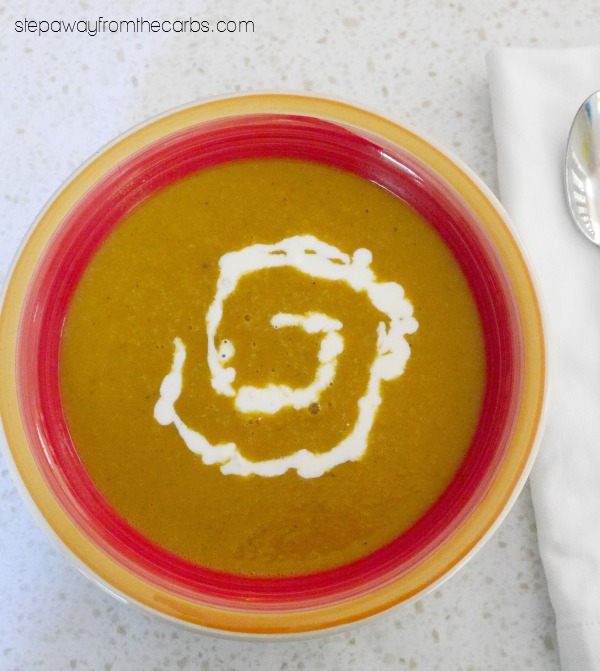
This Indian butternut squash soup is velvety, gently spiced and naturally dairy free, with garam masala, turmeric and cumin simmered into creamy coconut milk. It's a cozy fall lunch that tastes far more indulgent than it is, and it's ready in about 45 minutes.
Butternut squash isn't super low in carbs, but it is much lower than potato and it has the same kind of filling quality, with much more flavor! It's also a good source of fiber, vitamin C, potassium and vitamin A. Keep an eye on the portion and it fits nicely into a low carb day. Looking for more ideas like this one? Check out my guide to low carb Indian food.
Key Ingredients & Substitutions
- Butternut squash. The star of the soup, and also the highest-carb ingredient in it. One small squash gives you about 1 lb (450 g) of peeled, cubed flesh, which is enough for four bowls. Raw butternut squash has roughly 10g net carbs per 100 g, so each 1-cup serving of this soup comes to about 15g net carbs. That makes it a low carb soup, not a keto one. If you track closely, weigh the cubes, because a bigger squash means more carbs per bowl. Pre-cubed squash from the store works fine, and any leftovers are great in my Low Carb Butternut Squash Hash or Butternut Squash Dip.
- Coconut milk. Full-fat canned coconut milk makes the soup creamy without any dairy, and the fat keeps you full for hours. Skip "lite" coconut milk (it's mostly water) and the cartons of coconut milk beverage, which are thin and sometimes sweetened.
- Garam masala. This warm spice blend of cinnamon, cardamom, cloves, coriander and black pepper does most of the flavor work. Blooming it in the oil first wakes it right up. A store-bought blend such as this garam masala is perfect, and mild curry powder works in a pinch.
- Turmeric and cumin. Ground turmeric gives the soup its golden color and an earthy note, while ground cumin adds a gentle smoky depth.
- Onion powder. It keeps the prep quick and adds a savory base. If you prefer, saute half a small chopped onion in the oil before the spices; it adds less than 1g net carbs per serving.
- Chicken stock. Store-bought or homemade both work. Low-sodium stock lets you control the salt, and vegetable stock makes the soup vegetarian.
Helpful Tips
Simmering vs. roasting. This recipe simmers the raw squash right in the coconut milk and stock, which is the quickest route (about 25 minutes) and only dirties one pan. If you have a little more time, roast the cubes first: toss them in the olive oil and roast at 400°F (200°C) for 25 to 30 minutes, until the edges caramelize. Then bloom the spices in a splash more oil, add the roasted squash with the liquids and simmer for just 10 minutes. Roasting gives a deeper, slightly sweeter flavor, and the carbs are the same either way.
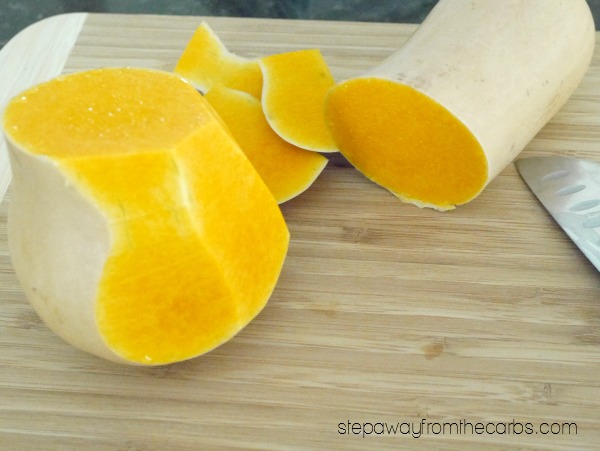
Peel the squash in two sections. I always cut the squash into the neck (the long, solid part) and the round base. The neck is easy to peel and cube, and the base just needs the seeds scooped out. If the skin is very tough, microwave the whole squash for 2 to 3 minutes to soften it before peeling.
Bloom the spices, but don't burn them. About a minute in hot oil over medium heat is all the garam masala needs. As soon as it smells fragrant, add the squash and liquids. Scorched spices taste bitter, and there's no fixing that once it happens.
Blend safely. An immersion blender lets you blend right in the pan. If you use a countertop blender, fill it no more than halfway, remove the center cap and cover the opening with a folded towel so the steam can escape. Watch out for hot splashes!
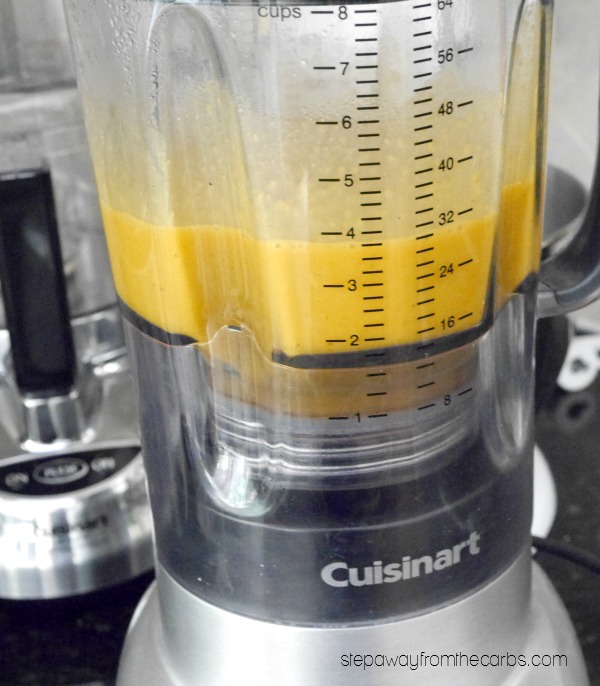
Adjust the thickness at the end. If the soup is thicker than you like, splash in a little more stock. If it's too thin, simmer it uncovered for a few minutes. Always taste for salt after blending, since the flavors come together once everything is smooth.
Variations
- Extra creamy coconut. Swap the stock for a second can of coconut milk for a richer, more velvety soup. It adds about 3g net carbs per serving, so it's still low carb.
- More heat. Add ½ teaspoon of cayenne or red pepper flakes with the garam masala, or saute a chopped green chili and a teaspoon of grated fresh ginger in the oil first.
- Lower carb. Replace half the squash with cauliflower florets. The soup stays creamy and comes closer to 11g net carbs per serving.
- Thai-style. Use a tablespoon of red curry paste instead of the garam masala and finish with a squeeze of lime. If you love that combination, try my Keto Coconut Curry Soup too.
- Make it a meal. Stir shredded cooked chicken or a handful of cooked shrimp into the blended soup and warm through.
- Crunchy toppings. Sprinkle with roasted pumpkin seeds, chopped cilantro or a drizzle of chili oil.
Serving Ideas
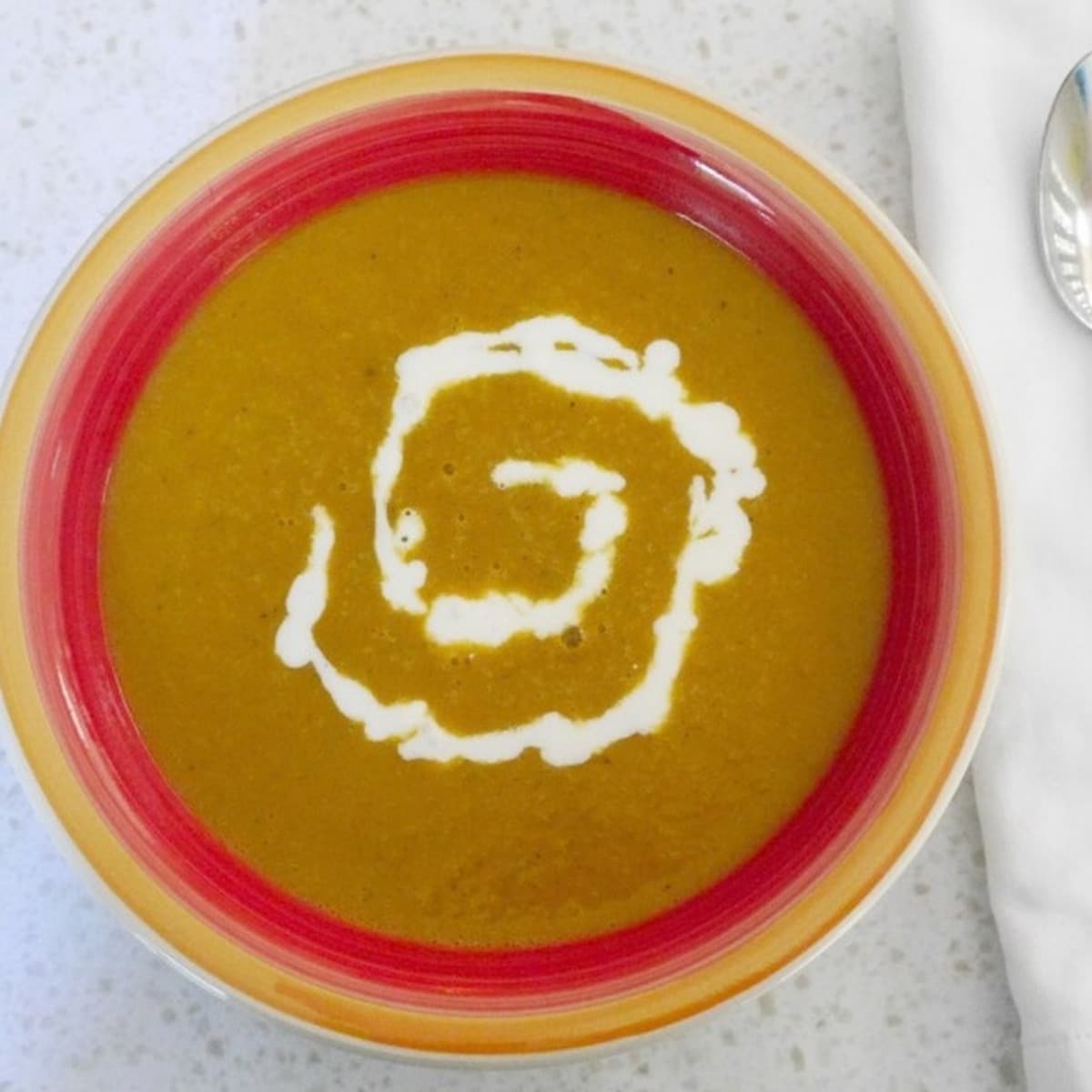
This soup makes a wonderful autumn lunch on its own with a swirl of sour cream (or coconut cream to keep it dairy free). For something more filling, serve it with a warm low carb naan bread for dunking and a cooling bowl of Low Carb Raita with Cucumber and Mint on the side.
It also works as a starter before an Indian-inspired dinner such as Keto Slow Cooker Butter Chicken or Low Carb Chicken Tikka Masala. Served in small cups, it makes an elegant first course for Thanksgiving or a holiday dinner, and a smaller portion keeps the carbs down too.
Storing & Freezing
Let the soup cool, then store it in an airtight container in the fridge for up to 4 days. Reheat it gently on the stovetop over medium-low heat, stirring often. The coconut milk can separate a little as it sits, so a good stir or a quick whisk brings it back together. Add a splash of stock if it has thickened in the fridge.
This soup freezes beautifully. Freeze it before adding any sour cream, in freezer-safe containers or bags with a little room at the top for expansion, for up to 3 months. Thaw it overnight in the fridge, then reheat on the stovetop and whisk or blend briefly if the texture looks grainy. Freezing it in single portions makes for an easy grab-and-go lunch.
FAQs
Is butternut squash keto?
Butternut squash is higher in carbs than most low carb vegetables, with roughly 10g net carbs per 100 g, so it's best enjoyed in measured portions rather than as an everyday staple on strict keto. A full 1-cup serving of this soup has about 15g net carbs, which fits a low carb diet but is more than most keto eaters want in one bowl. If you're following keto, enjoy a smaller starter portion of about ⅔ cup (around 9g net carbs) or try the half-cauliflower variation above.
Can I freeze this soup?
Yes! Freeze the blended soup without any toppings for up to 3 months. Thaw it in the fridge overnight and reheat it on the stovetop. If the coconut milk separates a little, whisk it or give it a quick blend and it will be smooth again.
More Low Carb Soups
If you loved this soup, here are a few more you might enjoy:
📖 Recipe
Indian Butternut Squash Soup
Ingredients
Step-by-Step Instructions
- Heat the olive oil in a large saucepan over medium heat. Add the garam masala and stir for about 1 minute, until fragrant. Don't let it scorch.
- Add the cubed squash, onion powder, turmeric and cumin and stir to coat in the spiced oil. Pour in the coconut milk and chicken stock.
- Bring to a boil, then reduce the heat to low, cover and simmer for 20 to 25 minutes, until the squash is completely soft when pierced with a knife.
- Blend until smooth with an immersion blender, or carefully transfer to a countertop blender (fill it no more than halfway and vent the lid). Season with salt and pepper to taste and blend briefly again.
- Ladle into bowls and add a swirl of sour cream (or coconut cream), if desired.
Nutrition
Notes
Tried this recipe?
Let us know how it was!Nutritional information is provided as a courtesy and is my best approximation. Net carbs are calculated as the total grams carbs minus the total grams of fiber.
paws says
This was really yummy! Thanks for the recipe.